Quercetin

Versatile flavonoid for cellular wellbeing.

Quercetin
Introduction

The versatile flavonoid

Quercetin is a natural flavonoid present in many plant foods, known for its antioxidant action and for its role – often in synergy with other actives such as fisetin – in promoting the elimination of senescent cells within longevity research.

It also has a natural balancing action on the immune response. It is a versatile and well studied ingredient, frequently present in the most complete formulations dedicated to long-term cellular wellbeing.

What is Quercetin

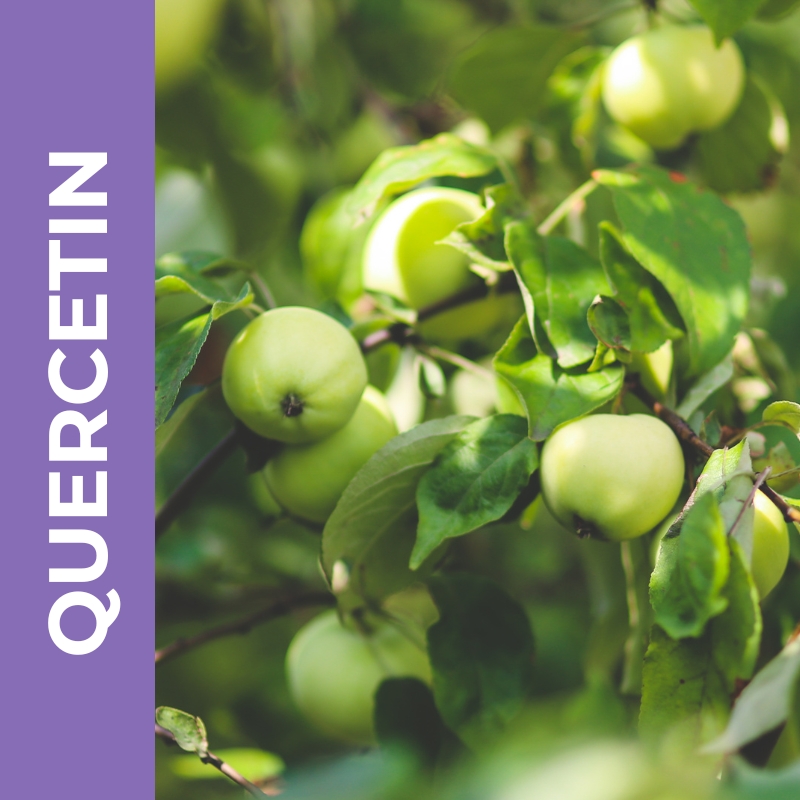
Quercetin is present in red onion, apples, capers and green tea, and it is one of the most widely represented flavonoids in the human diet.

Its natural bioavailability is limited, which is why nutraceutical formulations rely on phytosome complexes or on combinations designed to improve absorption.

Role in Longevity and Healthy Aging

Quercetin exerts a senolytic action (via PI3K/AKT and BCL-2/BCL-XL) and a stabilizing action on mast cells, useful in the control of inflammaging.

This double profile – on senescent cells and on inflammatory balance – explains why quercetin recurs in longevity formulations both as a protagonist and as a complement to other actives.

Nutraceutical Applications

Quercetin is formulated in capsules and in phytosome complexes designed to improve its naturally limited bioavailability.

It is synergistic with fisetin in senolysis, while its absorption is enhanced by bromelain or vitamin C.

Naturally Found In

  • Red onion
  • Apples
  • Capers
  • Green tea

Synergies

  • Fisetin – Combined senolytic action
  • Bromelain – Enhances the absorption of quercetin
  • Vitamin C – Enhances absorption and complements antioxidant action
Partner with us

Looking to develop innovative nutraceutical formulations?

Our expert team can support your company with cutting-edge ingredients and breakthrough technologies to create innovative solutions for healthy aging and longevity.

Contact Us
Scroll